- Oracle Virtualbox For 32 Bit Host
- Virtualbox Only Showing 32 Bit
- Virtualbox 32-bit Windows 7
- Virtualbox 32 Bit Host Windows 10
- Virtualbox 32-bit Download
Portable-VirtualBox is a free and open source software tool that lets you run any operating system from a usb stick without separate installation.
Installation instructions
VirtualBox is a powerful x86 and AMD64/Intel64 virtualization product for enterprise as well as home use. Not only is VirtualBox an extremely feature rich, high performance product for enterprise customers, it is also the only professional solution that is freely available as Open Source Software under the terms of the GNU General Public License (GPL) version 2. I've got an ubuntu 64-bit host running virtualbox. I want to setup several linux guests which will only have 1 or 2 GB of RAM. Is there any reason to to install the guests with a 64-bit OS, or can I install 32-bit and not notice any difference? Thanks in advance! If the host machine is 64-bit and you are using VirtualBox to host and running your virtual machine, don’t be puzzled if your VirtualBox is showing you that it can only support for 32-bit of operating system. This isn’t “normal” and you can fix it to enable VirtualBox to support 64-bit OS. You are not restricted in running 32-bit of Windows. Since supporting 64 bits on 32-bit hosts incurs additional overhead, VirtualBox only enables this support upon explicit request. On any host, you should enable the I/O APIC for virtual machines that you intend to use in 64-bit mode. This is especially true for 64-bit Windows VMs. See the section called “'Advanced' tab”. This tutorial will show you step by step what to do when VirtualBox is only showing 32-bit and no 64-bit versions of operating systems as options while creating a new virtual machine. Note: This may be obvious for most of you, but your host operating system should be 64-bit to run 64-bit guest operating systems in VirtualBox.
- Download and run Portable-VirtualBox_v5.1.22-Starter_v6.4.10-Win_all.exe.
- Choose a folder to extract to.
- Go to the folder and run Portable-VirtualBox.exe. You'll see a window like the one below:
- If you have already downloaded the installer for VirtualBox from www.virtualbox.org click search and navigate to the file. If not, click 'Download The Installation Files of VirtualBox.' Portable-VirtualBox will show you the download's progress.
- Once the installer is download, check the boxes that are appropriate and click OK. Portable-VirtualBox will extract the files it needs from the VirtualBox installer, and restart itself afterward if you select the last checkbox.
Optional configuration
Portable-VirtualBox makes default settings automatically. You can modify them by pressing CTRL-5 or opening the tray menu while Portable-VirtualBox is running. Either action will bring up the configuration GUI below. The Hokey-Settings tab is shown open in the image below:
Features
- Splash screen to start and end
- Configurable Home Directory
- Launch the VirtualBox GUI or directly launch a VM
- Configure the hotkeys for managing your virtual machine
- Configure USB and network support
- Choose language for GUI
- Saves settings in editable *.ini-files
- Can automatically check for VirtualBox updates
- All absolute paths in the VirtualBox.xml are replaced automatically by relative paths
- Checks to make sure VirtualBox files exist
Install files signature
All install files after launcher version 6.4.10 is digitally signed. Signer is “Open Source Developer, Runar Buvik”, certificate is issued by Certum Level III CA. This is temporarily disabled until a new certificate arrives in the mail.
Note
VirtualBox needs several kernel drivers installed and needs to start several services: if the drivers and services are not already installed you'll need administrator rights to run Portable-VirtualBox.
When Portable-VirtualBox starts, it checks to see if the drivers are installed. If they are not it will install them before running VirtualBox and will remove them afterward. Similarly, Portable-VirtualBox checks to see if the services are running. If not, it will start them and then stop them when it exits.
If you want to save space you can remove the language files for other languages than your own. That can save you nearly 10 MB. They are in the nls directory.
You can also delete the documentation saving nearly 5 MB. You will find it in the doc directory.
When the VM is running you must press the 'Host-Key' (initially configured as the right CTRL-Key) to be able to use the other Hotkeys since otherwise the VM will have the focus.
Network support

- To download of Portable-VirtualBox
- Unpack from Portable-VirtualBox
- Start from Portable-VirtualBox
- Attitudes open (Tray --> attitudes, CTRL+5) --> rider Network (Tab) --> VirtualBox with network support start --> memory (save)
- Terminate from Portable-VirtualBox
- Start from Portable-VirtualBox
- Driver installation agree
- Wait
- Selection of a VM and the network map to host interfaces stop
- Attitudes make
- FINISHED
Languages of Launcher
English, German, Portuguese, Spanish, French, Italian, Chinese, Japanese, Polish, Russian and Ukrainian.
Important
None of the files that come from VirtualBox are modified or otherwise changed.
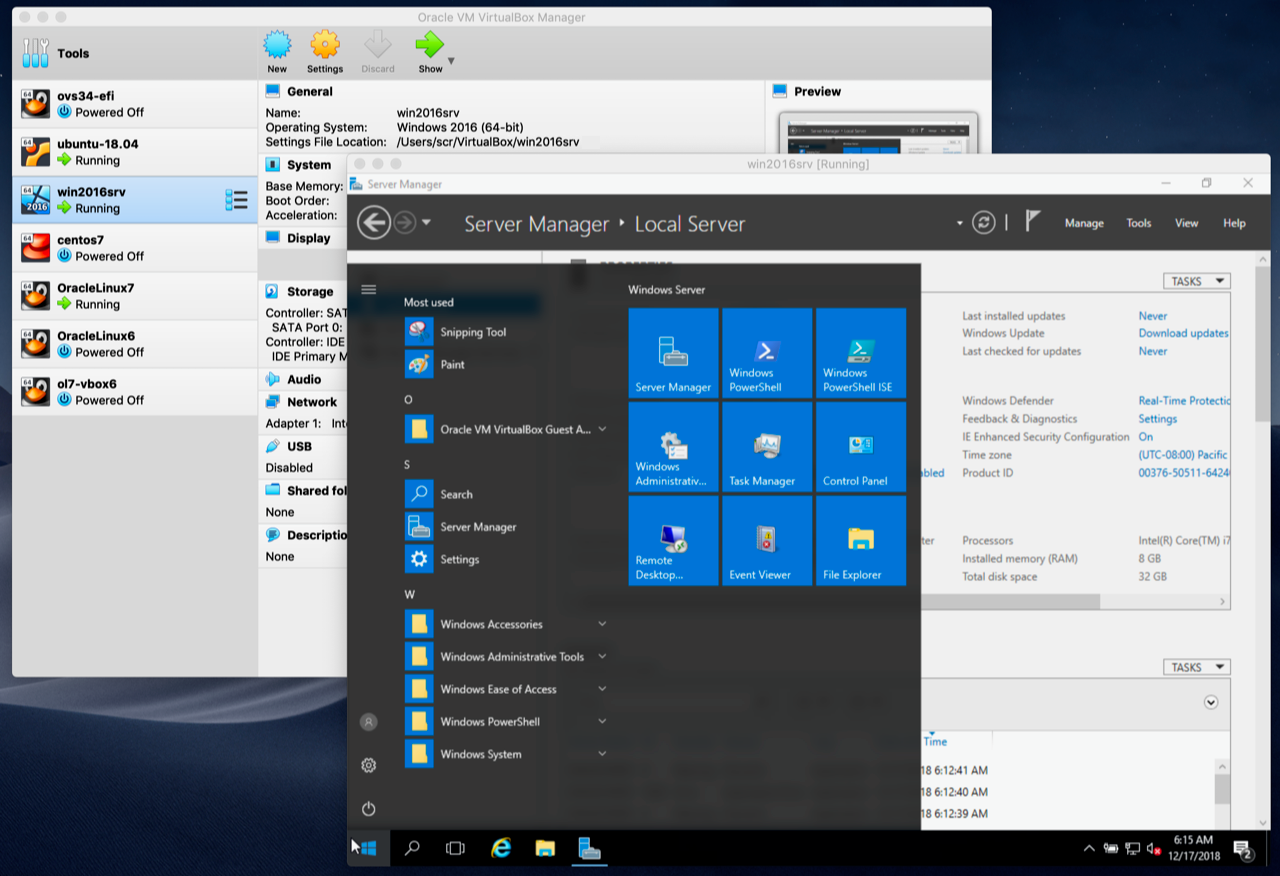
Oracle Virtualbox For 32 Bit Host
Portable-VirtualBox downloads the VirtualBox installer which contains all of the VirtualBox files and drivers. Portable-VirtualBox unpacks the files and stores them in subdirectories . Portable-Virtualbox can also compress them in order to save space.
[adsense:client=ca-pub-123456,slot=123456,type_ad=head]
Virtualbox Only Showing 32 Bit
Some Oracle VM VirtualBox features are labeled as experimental. Such features are provided on an 'as-is' basis and are not formally supported. However, feedback and suggestions about such features are welcome. A comprehensive list of experimental features is as follows:
Virtualbox 32-bit Windows 7
Hardware 3D acceleration support for Windows, Linux, and Oracle Solaris guests
Hardware 2D video playback acceleration support for Windows guests
Mac OS X guests (Mac OS X hosts only)
ICH9 chipset emulation
EFI firmware
Host CD/DVD drive passthrough
Support of iSCSI using internal networking
Using Oracle VM VirtualBox and Hyper-V on the same host
Virtualbox 32 Bit Host Windows 10
The following section describes known problems with this release of Oracle VM VirtualBox. Unless marked otherwise, these issues are planned to be fixed in later releases.
Poor performance when using Oracle VM VirtualBox and Hyper-V on the same host. To fix this, certain Windows features like 'Hyper-V Platform', 'Virtual Machine Platform' and 'Windows Hypervisor Platform' must be turned off, followed by a host reboot.
Additionally, the Microsoft Device Guard and Credential Guard hardware readiness tool might have to be used in order to turn off more features. For example, by running the following command:
Disabling Device Guard and Credential Guard features will have an impact on the overall security of the host. Please contact your Administrator beforehand regarding this.
The following Guest SMP (multiprocessor) limitations exist:
Poor performance with 32-bit guests on AMD CPUs. This affects mainly Windows and Oracle Solaris guests, but possibly also some Linux kernel revisions. Partially solved for 32-bit Windows NT, 2000, XP, and 2003 guests. Requires the Guest Additions to be installed.
Poor performance with 32-bit guests on certain Intel CPU models that do not include virtual APIC hardware optimization support. This affects mainly Windows and Oracle Solaris guests, but possibly also some Linux kernel revisions. Partially solved for 32-bit Windows NT, 2000, XP, and 2003 guests. Requires the Guest Additions to be installed.
NX (no execute, data execution prevention) only works for guests running on 64-bit hosts and requires that hardware virtualization be enabled.
Guest control. On Windows guests, a process started using the guest control execute support will not be able to display a graphical user interface unless the user account under which it is running is currently logged in and has a desktop session.
Also, to use accounts without or with an empty password, the guest's group policy must be changed. To do so, open the group policy editor on the command line by typing gpedit.msc, open the key
Computer ConfigurationWindows SettingsSecurity SettingsLocal PoliciesSecurity Optionsand change the value ofAccounts: Limit local account use of blank passwords to console logon onlyto Disabled.Compacting virtual disk images is limited to VDI files. The VBoxManage modifymedium --compact command is currently only implemented for VDI files. At the moment the only way to optimize the size of a virtual disk images in other formats, such as VMDK or VHD, is to clone the image and then use the cloned image in the VM configuration.
OVF import/export:
OVF localization, with multiple languages in a single OVF file, is not yet supported.
Some OVF sections like StartupSection, DeploymentOptionSection, and InstallSection are ignored.
OVF environment documents, including their property sections and appliance configuration with ISO images, are not yet supported.
Remote files using HTTP or other mechanisms are not yet supported.
Neither scale mode nor seamless mode work correctly with guests using OpenGL 3D features, such as with Compiz-enabled window managers.
The RDP server in the Oracle VM VirtualBox extension pack supports only audio streams in format 22.05kHz stereo 16-bit. If the RDP client requests any other audio format there will be no audio.
Preserving the aspect ratio in scale mode works only on Windows hosts and on Mac OS X hosts.
On Mac OS X hosts, the following features are not yet implemented:
Numlock emulation
CPU frequency metric
Memory ballooning
Mac OS X guests:
Mac OS X guests can only run on a certain host hardware. For details about license and host hardware limitations. See Mac OS X Guests and check the Apple software license conditions.
Oracle VM VirtualBox does not provide Guest Additions for Mac OS X at this time.
The graphics resolution currently defaults to 1024x768 as Mac OS X falls back to the built-in EFI display support. See Video Modes in EFI for more information on how to change EFI video modes.
Mac OS X guests only work with one CPU assigned to the VM. Support for SMP will be provided in a future release.
Depending on your system and version of Mac OS X, you might experience guest hangs after some time. This can be fixed by turning off energy saving. Set the timeout to 'Never' in the system preferences.
By default, the Oracle VM VirtualBox EFI enables debug output of the Mac OS X kernel to help you diagnose boot problems. Note that there is a lot of output and not all errors are fatal. They would also show when using a physical Apple Macintosh computer. You can turn off these messages by using the following command:
To revert to the previous behavior, use the following command:
It is currently not possible to start a Mac OS X guest in safe mode by specifying the
-xoption inVBoxInternal2/EfiBootArgsextradata.
Oracle Solaris hosts:
USB support on Oracle Solaris hosts requires Oracle Solaris 11 version snv_124 or later. Webcams and other isochronous devices are known to have poor performance.
Host Webcam passthrough is restricted to 640x480 frames at 20 frames per second due to limitations in the Oracle Solaris V4L2 API. This may be addressed in a future Oracle Solaris release.
No ACPI information, such as battery status or power source, is reported to the guest.
No support for using wireless adapters with bridged networking.
Crossbow-based bridged networking on Oracle Solaris 11 hosts does not work directly with aggregate links. However, you can use dladm to manually create a VNIC over the aggregate link and use that with a VM. This limitation does not exist in Oracle Solaris 11u1 build 17 and later.
Neither virtio nor Intel PRO/1000 drivers for Windows XP guests support segmentation offloading. Therefore Windows XP guests have slower transmission rates comparing to other guest types. Refer to MS Knowledge base article 842264 for additional information.
Guest Additions for OS/2. Seamless windows and automatic guest resizing will probably never be implemented due to inherent limitations of the OS/2 graphics system.
Some guest operating systems predating ATAPI CD-ROMs may exhibit long delays or entirely fail to boot in certain configurations. This is most likely to happen when an IDE/ATAPI CD-ROM exists alone on a primary or secondary IDE channel.
Affected operating systems are MS OS/2 1.21: fails to boot with an error message referencing COUNTRY.SYS and MS OS/2 1.3: long boot delays. To avoid such problems, disable the emulated IDE/ATAPI CD-ROM. The guest OS cannot use this device, anyway.
Virtualbox 32-bit Download
Copyright © 2004, 2021 Oracle and/or its affiliates. Legal Notices